
I get asked two questions several times a week, and I brush off both with a verbal swat.
One — because I’m in my late 20s, I suppose – is when are you getting married? And the other, because it seems like small talk, is why did you leave the newspaper?
I could answer both with a single word: Money.
But I usually deflect the marriage subject, wrongly justifying it as an acceptable passing question, with a practical reason: I’m not eager to have children. And I answer the news question with something to which my audience can nod along: “It didn’t seem like a sustainable career path.”
But that’s a cold and detached answer. I don’t feel cold and detached about news, and I only give that response under the assumption that people don’t want to hang around for the full story – ironically, the same reason newspapers aren’t really working anymore.
So here goes. This is the real reason why I left news: I finally came to accept that the vanity of a byline was keeping me in a job that left me physically and emotionally exhausted, yet supremely unsatisfied.
I started working at newspapers in 2005, the tail-end of the good days. During my first year of work, a Florida newspaper flew me down to the Mexican border to write about cocaine cartel murders back at home. We booked the first available flight, disregarding expense, and arrived before the investigators. That would not happen at a daily newspaper today.
I don’t think the Internet killed newspapers. Newspapers killed newspapers.
People like to say that print media didn’t adapt to online demand, but that’s only part of it. The corporate folks who manage newspapers tried to comply with the whims of a thankless audience with a microscopic attention span. And newspaper staffers tried to comply with the demands of a thankless establishment that often didn’t even read their work. Everyone lost.
People came to demand CNN’s 24-hour news format from every news outlet, including local newspapers. And the news outlets nodded their heads in response, scrambling into action without offering anything to the employees who were now expected to check their emails after hours and to stay connected with readers through social media in between stories.
There was never such a thing as an eight-hour workday at newspapers, but overtime became the stuff of legend. You knew better than to demand fair compensation. If any agency that a newspaper covered had refused to pay employees for their time, the front-page headlines wouldn’t cease. But when it came to watching out for themselves, the watchdogs kept their heads down.
A little more than a month after I left the newspaper, I went to Key West for a friend’s wedding. I realized on the drive home that I had never taken a vacation – aside from a few international trips – without some editor calling with a question about a story. I remember walking down Fifth Avenue in New York on my birthday a few years ago, my cell phone clutched to my ear and mascara running down my face, as an editor told me that he thought the way I had characterized a little girl with cancer needed to be sadder.
To many people, and even to me, part of the draw of news is that it never stops. You wholly invest yourself in a story – until something bigger happens. The only guarantee in any workday is the adrenaline rush. And even when the story isn’t terribly thrilling, you’ve still got a deadline to contend with, a finite amount of time to turn whatever mess you’ve got into 12 to 15 column inches that strangers would want to read.
The flip side to the excitement is the burnout. You’re exhausted, and you’re never really “off.” You get called out of a sound sleep to drive out to a crime scene and try to talk with surviving relatives. You wake up at 3 a.m. in a cold sweat, realizing you’ve misspelled a city councilman’s name. You spend nights and weekends chipping away at the enterprise stories that you never have time to write on the clock.
Everyone works so hard for so long and for such little compensation. The results are dangerous.
We saw it with the Supreme Court health care ruling, as our national news leaders reported the decision incorrectly. We saw it with the Newtown massacre, when initial reports named the suspect’s brother as the shooter. Major news outlets are no better than bloggers if they adopt a policy of getting it out first and correcting it later. They don’t have the money to fend off the resulting lawsuits, and they don’t have the circulation numbers to allow people to lose faith in their product.
Newspapers always have been liberal places where people work hard for little pay, because they believe in the job. They always could empathize with the poor. But pay continues to dwindle to the point that I wonder what kind of person, today, enrolls in journalism school?
I took a pay cut when I moved back from Florida to Charleston, expecting to make up the difference quickly. Instead, I quit my newspaper job at 28, making less money than earned when I was 22.
I can’t imagine anyone outside of an affluent family pursuing a career with so little room for financial growth. And I wonder: Would that well-to-do reporter shake hands with the homeless person she interviews? Would she walk into a ghetto and knock on a door to speak with the mother of a shooting victim? Or would she just post some really profound tweets with fantastic hash tags?
Maybe that’s what people – editors and readers – put at a premium now. Maybe a newsroom full of fresh-from-the-dorm reporters who stay at their desks, rehashing press releases and working on Storify instead of actual stories, is what will keep newspapers relevant.
But I doubt it.
The day I announced my resignation, I had to cover the alcohol ban on Folly Beach. The photographer working the story with me said very little about my decision, except for one heartbreaking statement: “But you were made to do this.”
I had thought so, too. For so long, people had asked me what I would do if my name wound up on a future round of layoffs, if my paycheck were furloughed into oblivion.
I had spent countless hours late at night trolling online for something else that appealed to me. But covering news was the only thing I ever had wanted to do and the only thing I ever had imagined doing.
I started writing stories for my local newspaper when I was 16. I worked seven internships in college, eager to graduate and get into a newsroom. I left school early, school that was already paid for with enough scholarship money that I took home a check each semester, so that I could lug my 21-year-old life to West Palm Beach and work the Christmas crime shift alone in a bureau. And I wouldn’t change that decision for anything.
People in news like to describe a colleague’s departure, especially into a public relations or marketing job, as “going to the dark side.” When word of my resignation traveled through the newsroom, I heard “dark side” references over and over, always with a smile and a wink. I couldn’t help but resent them. But I looked over my cubicle each time and flashed my best Miss America grin instead of the middle finger poised over my keyboard.
I now write for the fundraising arm of a public hospital. Anyone who thinks that’s going to the dark side is delusional. And as my former coworkers ate farewell cake on my last day at the paper, a few of them whispered, “Do they have any other openings over there?”
I don’t know a single person who works in daily news today who doesn’t have her eyes trained on the exit signs. I’m not sure what that says about the industry, but I certainly don’t miss the insecurity.
Sure, it took me a while to get used to my new job. When I go to parties, I no longer can introduce myself as a reporter and watch people’s eyes light up. Instead, I hear how people miss seeing my byline. No one misses it more than I.
News was never this gray, aging entity to me. It was more like young love, that reckless attraction that consumes you entirely, until one day – suddenly — you snap out of feeling enamored and realize you’ve got to detach. I left news, not because I didn’t love it enough, but because I loved it too much – and I knew it was going to ruin me.
 Sticky Valentines
You are not a journalist. Stop pretending you are. I’m sick of PR people regaling those of us working for a living with claims that they used to be reporters. Blog postings are even sadder. Yawn.
I suppose that trolling might be a way to make a living. Sad, though, even if it’s just a hobby.
And what have you written, Paul, that has attracted as much interest as Allyson’s essay? She even elicited a comment from you.
Some of the laziest people I ever met worked in newspapers. Lifers were the worst. The government employee mentality was ridiculous. And anybody stuck in community journalism simply didn’t have the ambition or talent to do anything else, Paul. Continue posting your wire stories and pretending to make a difference.
Slowing down | The Pursuit of Meaning
I should have known newspapers were in trouble when i was the only person I knew in college who read one. That was the early 1980s. And I watched the over-50 journalists at the paper where my dad worked get pushed out when Gannett bought it (though somehow he survived to retirement). That was in the 1970s. I remember the double-digit profit growth of the ’80s and early ’90s, when we had a fully staffed copy desk and a great combination of rookie and veteran reporters who had time to develop enterprise stories. But that ended. It wasn’t just the Internet, though I wish the Web had been dealt with from the start. My dad told me to make journalism a first career and get out by age 50. And I’m following that advice. Journalism is fun. But so is other work. I’m ready for the next adventure, so I’m working my last couple of days as a journalist. Then its on to writing for a hospital. I have no apprehensions about that.
I can relate, but for me journalism is a calling. An itch that will not go away. I work in small towns where the reporting is more personal and the contacts real. I got downsized in 2011, but I found writing jobs and now full-time in another paper. The thrill is still there, even if the money isn’t.
I agree with most of what you wrote but the liberal bias (you even referenced it in your article) is what is killing the media. They lost the audiences attention when it became more important to push an agenda as opposed to the truth.
Yeah, the Internet this and bloggers that, I agree, I make part of my living off of both, but the true cause for the media’s demise is their unwillingness to report the truth, the desire to spark controversy and a total lust for the power that came from being in the position they were.
The media got fat, lazy and content thinking they were the be-all, end-all to information distribution and they forgot that they had a responsibility to the people!
I am pretty sure she meant “liberal” in the cultural sense, that newsrooms are not button-down, corporate environments. Excellent commentary, Allison. I left a large newspaper about 18 months ago, after 22 years there and nearly seven years at my previous paper. I thought I would work in journalism forever. You had the misfortune of starting your career almost exactly when the industry began imploding. I feel grateful I had a number of good years. If I were in my 20s now, I think I would consider journalism, and then find a different path, one in which I could support myself and maybe even save some money.
The other side of the coin would blame readers who developed right-wing ideologies and misinterpret almost everything they read in the media. These readers look only for something to support their own world view. Newspapers that try to appel to these indiscriminate readers are on a fool’s mission.
Yeah, we readers are all so, so much stupider than those of you who write the stories. We sit here in the dark, clinging to our guns and our bibles, waiting for you to tell us what to think. That’s mainly the purpose of newspapers — right?
I remember the day, a long time ago, when I couldn’t even tell what the politics of a reporter WERE on a story. Oh, well…
I rest my case, Dick. You batted 1.000 for noncomprehension and distortion of a simple paragraph. A job at FOX News awaits you. I remember the day when many readers actually tried to understand the world they live by reading a newspaper. But now they know everything before they read it because Rush Limbaugh has told them all they need to know. Amazing. Oh, well . . . .
I think, Iongrow, if you’re going to have the attention of a public forum, there ought to be a little more humility to go with it. You just beat up on Dick Carlson and I think some of his impressions are reasonable. i happen to be fairly conservative, conservative to the point that at one newspaper where I worked, more than once an editor brought strangers over to introduce them to me, saying, “John is our conservative here.” I’ve been in five newsrooms in my nearly 40-year career and all have been liberal to greater or lesser degree. That’s not scientific, we both know, but after a while one begins to form an impression. You have reinforced it, but then so have so many more on countless blogs. You should *never* blame readers for anything. They are your customers, your bread and butter, and they are fleeing (and not just because you might be liberal, but I think in large part because we might be boring). I think I belong to the generation that decided it was necessary not merely to report, but that advocacy was the new mission (or at least became the main mission, because it always has been there). Now, I happen not to agree that liberalism exclusively is killing newspapers or any so-called mainstream media. Attention span and the availability of free stuff where once people had to pay are the big bottom-lime factors (and since you might have wondered, one of my stops was for 29 years at a single paper before job was yanked from under me, so I’ve had that terrible experience). More dependence on, and *trust of* our readers (our “customers*) might stanch the hemorrhage, of not altogether stop it. You’l excuse me, but not I’ll go get another cup of coffe and get back to “Fox and Friends,” where their grasp of economics seems to be more in line with that which I learned at a major university years ago.
Nah, he never even laid a glove on me! I’m a darned good writer (and financially quite successful one, thank-you) in the world of education and training. “Dark Side” on steroids. Over four decades I’ve worked in and with lots and lots of media — TV, Radio, Newspapers, Magazines — on one level or another. And I’ve found that people in any job where they feel they “just don’t get no respect” usually aren’t very focused on providing what the customer wants and needs.
As soon as you start assuming you know better that’s when financial alarms should start going off. If you’re planning a Crusade, don’t operate it as a business — get someone willing to melt down their jewels to support your cause. There are many people making a tidy profit creating content (both online and paper) that people pay handsomely for. So, gaze into your ink-stained navels and ask: “Why don’t readers value what we’re offering?”
Very well put. I completely agree with your consensus here and personally grow tired of hearing the big MSM networks referred to as “the liberal media” just because their appear slightly less desensitized than Romney or Limbaugh. Well put!
Extremely accurate for someone in their late 20s. The executive and managing editors now growing long in the tooth are buying in to the jive because they have no choice. Many have convinced themselves that they must latch on to a new – a different – ideology or be left behind. But the masses are losing out. The electorate, consumer and taxpayer that once were known as people are truly the ones getting the short end of the stick. I hear it every day. “Sad” is one word popular in the newsroom these days among those that understand the need for objective reporting – an account the day’s events. But we just can’t seem to let the reader take it from there anymore. We journalists are a proud bunch. “Sad” is when you witness a paper hiring someone with “extensive texting experience” to post “trending” items on a website where they still have not figured out how to produce revenue.
You hit the nail on the head Raymmar ! Bang on ! What killed ( past tense deliberately intended) journalism was the corporatisation and the greed for shareholder returns that followed it. Newspapers became Wallmarts, where it is either the reader or the employee that gets squeezed for accomodation to the advertisers. There is one more. Wallmart or other big shopping establishments squeezed suppliers mostly low margin farmers. In journalism it is worse. Reporters are pressured to compromise sources for the benefit of editors who style themselves as chief executives first and human beings last.
Journalists that compromised stayed on. Those who resisted compromise have preferred to hit the highway for alternative pursuits where at least there is some integrity and dignity left!
You hit the nail on the head Raymmar ! Bang on ! What killed ( past tense deliberately intended) journalism was the corporatisation and the greed for shareholder returns that followed it. Newspapers became Wallmarts, where it is either the reader or the employee that gets squeezed for accomodation to the advertisers. There is one more. Wallmart or other big shopping establishments squeezed suppliers mostly low margin farmers. In journalism it is worse. Reporters are pressured to compromise sources for the benefit of editors who style themselves as chief executives first and human beings last.
Journalists that compromised stayed on. Those who resisted compromise have preferred to hit the highway for alternative pursuits where at least there is some integrity and dignity left!
Il suicidio del giornalismo Usa | Valentina in Italiano
Otaku Links: sign up for Anime March Madness! | Otaku Journalist
Reblogged this on sublime life and commented:
I don”t reblog a lot but I really enjoyed this, mostly because it’s exactly how I felt when I left the newspaper business.
I agree. The Dark Side comments are stupid, and I was glad to read your counter arguments about that and the decline of newspapers and the impact of Internet news. You’re an original thinker. And, what is up with that lack of vacation? Similarly, I had to take some mandatory time off recently because I had built up so much vacation time. Really? I haven’t taken enough time off? Anyway, a part of me, though, wonders maybe you just needed a better editor, or maybe you needed to ditch the daily newspaper game. I’ve worked on dailies, weeklies, monthlies, online sites. This business can definitely beat you down. And working for trade pubs and non-dailies may not be as pulse-pounding and adrenaline-filled as daily news, but there are options. Glad you found work at a public hospital and hope it works out for you.
Memoir of an ex-journalist | Michelle Moriarity Witt
Well if you wanted to get back into investigative type reporting the folks at the Blaze are starting up a new hard news investigative section…
Talk about the dark side…
The honsety of your posting shines through
Now I’m like, well duh! Truly thankful for your help.
What We Read Around the Office - March 22nd 2013
Allyson, I’m sad to read of your disenchantment with the business I love so much and in which you seemed to thrive, at least when I was in Charleston. Indeed, the business has changed a lot since I typed stories on copy paper with a Remington in the1970s, but even now, after the so-called glory days, I still believe in a great and large audience for great stories well told. And I still believe in great things happening as a result of their being told. There never were considerations like overtime or vacations factored into the journalism equation in those glory days. It was just a way of life. Finding and telling stories. Day by day. And there never was money. There was sleeping on couches and being first and doing most and never considering being “off.” But there was glory in comforting the afflicted, afflicting the comfortable and exposing lies and hanging out with larger than life characters and wearing cheap suits that needed cleaning. Stress was and is normal. That was the glory days. I know. I lived them from typewriters to iPads. More than 35 years. It’s really no different today when you get down to where the rubber meets the road. And I lucked out in the twilight of my career, finding Scripps, where great stories well told are still the goal every day. My only other note for you is this: You were damn good. One of the best I’d seen. That’s why I wanted you in Charleston. So take that with you, for what it’s worth, and enjoy your new life. You deserve a good career and you may have found it. This isn’t for everyone, God knows. But the obits are premature. There’s a trailer park outside of town. Generations off good, but poor folk have lived there. The land owner is clearing it out soon. He has every right. But I wouldn’t miss being there when the bulldozers come for anything. That hasn’t changed. We’ll write about it and people will want to read it. And watch the video and look for the tweet, etc. etc. Maybe if I had a marketable skill I’d think differently. Best, Steve
bitter much?
As though there were anything shameful about being bitter. Why wouldn’t she be bitter? Why wouldn’t so many of us? A lot of us gave everything we had only to be handed a box and told to pack up and go. I believed what we did mattered, only to see that eroded year after year to be replaced with buzzwords and truisms such as “good enough for Gannett.” I used to be proud of what I did at my hometown newspaper. By the time I was finally let go, I was ashamed of what it had become.
Been there. Done that. After 37 years, I was totally burned out. Now I wonder if it was worth it.
Dear Allyson.
Thanks for writing this post. I feel represented by everything you wrote. It´s surreal because It´s like I wrote it myself. I think it´s so difficult to be a journalist these days. Nobody understands what we are up to.
I changed recently to the public relations area. It´s not as exciting as journalism and I have to say that I miss a lot being a journalist, but at least I have more time for myself and I live in a more relaxed way.
Good luck!
This is a most useful coortibutinn to the debate
That’s 2 clever by half and 2×2 clever 4 me. Thanks!
The newspaper was my father’s life. It dominated family life even before there were cell phones and laptops. He was never able to break away from his love of the story and the people he wrote about. While the paper became richer, they paid my father a pittance. When he left, he had been the editor (award winning) for almost twenty years, and the young people who were hired just out of college had starting salaries higher than what he was making after so many years. He never made as much as 10,000.00 a year and didn’t have benefits: no medical insurance or retirement. Sometimes I went with him to take photographs of fires at night or wrecks and attended some of the meetings he covered, but I knew better than to consider this as something I would do. Still, I hear a siren and I am ready to grab my camera and keys and run. Sometimes I do, and find myself taking pictures of a wreck or a fire- not denying the part that is my father living on in me.
Don’t let the door hit you … | John F.J. Sullivan
TWL #32 Digital Sharecropping, Local Schema Markup and the Natural Link Profile. | drunkonlife.net
Wow. I’m finishing week two of my first non newspaper job in 20 years. You summed up what I’ve been feeling and the exact reasons i had for leaving, burnout. A friend said it is like I got divorced and don’t know who I am without a newsroom. But getting home at 530 and getting to take a lunch break everyday is nice. But I will always have a special place for that time.
Loved it too much? Maybe just not as much as when you started and you needed/wanted to make more money.
Dang! What a downer. Allyson, I wish someone would have told you in college what I often tell journalism students. The news business is about passion, sacrifice, hard work, guts and busting your ass (to be blunt). I wish someone would have told you–there are no bankers hours, there are no holidays with the family, and sometimes the pay is awful.
I’ve been a reporter 31 years. I’ve gone from making $12,000 to 6 figures. But for me its not about the money–never has been,because I was told in college “Want to get rich don’t get in this business.” I often tell college kids I’d probably do this for free. Heck it beats cleaning toilets.
I love journalism, love that I have been on the front lines of where history is being created. I’ve interviewed the good, bad, ugly, famous and powerful. I’ve put people in jail for being scumbags and profiled people who are making an impact in this world.
Yes there have been times where I’ve wanted to call it quits–but this is a calling. We are the voice for those who want to right a wrong. We are the voice for those ignored for serious issues. I may not be rich—probably never will be–but I’m rich with experiences others wish they had today. Feel free to contact me if you ever want to get back into the business. Good luck!
Like you, Rebecca, I never went into journalism for the money, which is just as well.
But, towards the end of my 25 years in newspapers the aspects of the job that I valued – the satisfaction of a well-written story, the opportunity to bring an important, poignant or entertaining story to a broader audience, the autonomy and time to do a proper job – became increasingly rare commodities.
By the time I finished last year I was on a mindless filing treadmill – writing two or three stories for the web during the day before churning out up to another five yarns for the next day’s newspaper. The features and columns that increasingly became the only source of satisfaction in the job had to be researched and written on my own time.
My scepticism increasingly turned to cynicism. When people describe journalism as “a calling”, what they are really saying is that you need to put up with crap pay, poor editors, high stress and a 24/7 worklife as the price to pay for the ‘glory’ and ‘vocation’ of being a member of the fourth estate.
I’m sorry, I no longer buy that garbage.
Covering national politics is a pressure cooker job that I lived and breathed for more than 10 years, and I have increasingly come to the view that the only ones benefiting from the sacrifices I and my colleagues made, in time, money, remuneration and stress, were the passing parade of two-bit editors and executives who would hang around long enough to make some meaningless changes before adding the job to their CV and moving on.
There is still an eager audience for thoughtful and well-researched journalism, but the tragedy is that, in the online stampede, newspapers have increasingly lost confidence in what they used to do so well.
I’m glad for you, Rebecca, if you still love journalism, but I surely know that it does not love you back.
Articles like this really grease the shafts of knegeldwo.
I can already tell that’s gonna be super helpful.
As a former newsman of 15 years (broadcast) there is much in your essay I can relate to. I made good money but I finally got tired of the damage profit motive was doing to news coverage even at the local level. The day I had a knock down drag out with my station’s GM and GSM fighting for an investigative story to air that happened to be about our largest advertiser, was the day I realized I, as the news director, wasn’t in charge of the news after all. I won that fight, but less than 6 months later our parent company downsized us from 100 staff to 25 and from 21 newscasts per week to 5. I was released with the 75. The skills I honed in those 15 years have served me well in my second profession. I still love news and I too blog to get my fix.
“I don’t know a single person who works in daily news today who doesn’t have her eyes trained on the exit signs.”
Allyson, you need to get out more.
And all I can tell you is good riddance. Sorry if dedicating yourself to a craft isn’t enough and you were so delusional in 2005 as to not understand the business..
Mike Foley, here’s a newsflash: your comment is an embarrassment to yourself and the industry. Thankfully you are very old so we will be rid of you, too, soon enough.
If you are, in fact, the Mike Foley who is a senior lecturer at the University of Florida in the field of journalism, and you have so little empathy for the young people in your craft — people who studied journalism and then actually did it as opposed to going straight into PR or pharmaceutical sales like most of your students — then you’re part of the problem.
I understand the need to weed out folks at the front end. Like law schools today, there are about three times as many journalism programs as needed to fill openings in news. Oversupply keeps starting salaries artificially low. It makes sense to discourage people before they start chasing reporting jobs. This is old news.
But she did the hard work and took the hits. Fuck you, sir, for your lack of respect.
This grizzled former reporter may pay you a visit, next time I’m in Gainesville. You won’t like it.
Bravo for your words and sentiment! So many things are killing newspapers/print, but the thing that makes me saddest is the power advertisers have over controlling editorial content.
What We’re Reading | Red Sky Public Relations
Stephen Barrett › This Bird has flown: A reporter’s lament sounds a warning
Good for you
Yep, all that will eventually be left will be the “fundraising writers” and PR folks for various entities in health care or government- somewhere with enough budget to pay livable salaries. “News” will just be the flak thrown by PR groups and spin from business because there won’t be any real reporters left to sort it all out and call BULLSHIT when it’s time to do so. But I’ll tell you this…. the last of us to fall will be the newspaper folks.
“I’m standing up the morning after” | Steven Allen Adams
Reblogged this on I made the newspaper! Now what? and commented:
I have to share this post from a fellow former journalist. It moved me to tears. I’ll never get over my lost love: newspapers.
Now I feel stiudp. That’s cleared it up for me
It’s really great that people are sharing this information.
How could any of this be better stated? It couldn’t.
Thank you so much for this post. It’s nice to read that others feel the same way. I feel like I’ll always grieve over my lost newspaper career and over the loss of valuable journalism in the news industry. It’s not just easier on others when we brush off talking about leaving newspapers, it’s easier on us. I don’t think I could compose myself saying aloud the things you’ve posted here.
After 10 years,I left journalism in 1986 when I knew I could never send my newborn daughter to college on what I was making writing for my last metropolitan daily. I had been at two papers that closed. MBAs and CPAs instead of managing editors were setting newsroom budgets. I still miss it today, but I appreciate the writing, interviewing, and putting-myself-out-there skills developed at a half-dozen papers assisted by a half-dozen demanding city editors.
I was like you and now I am 42 and childless and wanting to have a baby and I am getting close to being too “old” to do that. Dont make the same mistake thousands of us have made young lady. When its time to pass on, you’re not going to say “gee, I really wish I worked more hours”. Have a family. Enjoy.
I left newspapers in 2000 if i remember correct. Or maby the newspaper (inside) left me. For me it was the moment accountants started making editorial decisions!
The results was disastrous, devastating and the lifeline of ink spilled out along with the passion and tallent of many.
I look back on a legacy of journalist (and photojournalist like myself, hence the lack of spelling ability) That had wiskey and printers ink in their veins. Their beards hard, heels sharp and I was always in amazement at just how dysfunctional we were.
Must say your comment on young love hit the spot. We were young, we were in love and reckless with our lives. It was great to be part of something so small.
Hail the old school.
Allison, you say words with nowhere else to go. (In all other media people live for themselves but somehow in newspapers we lived for that…) (Funny how I still love my radio even though they want me to tweet and facebook them all the time…)
My comment is: if you can write like this (you) you can go anywhere you want.
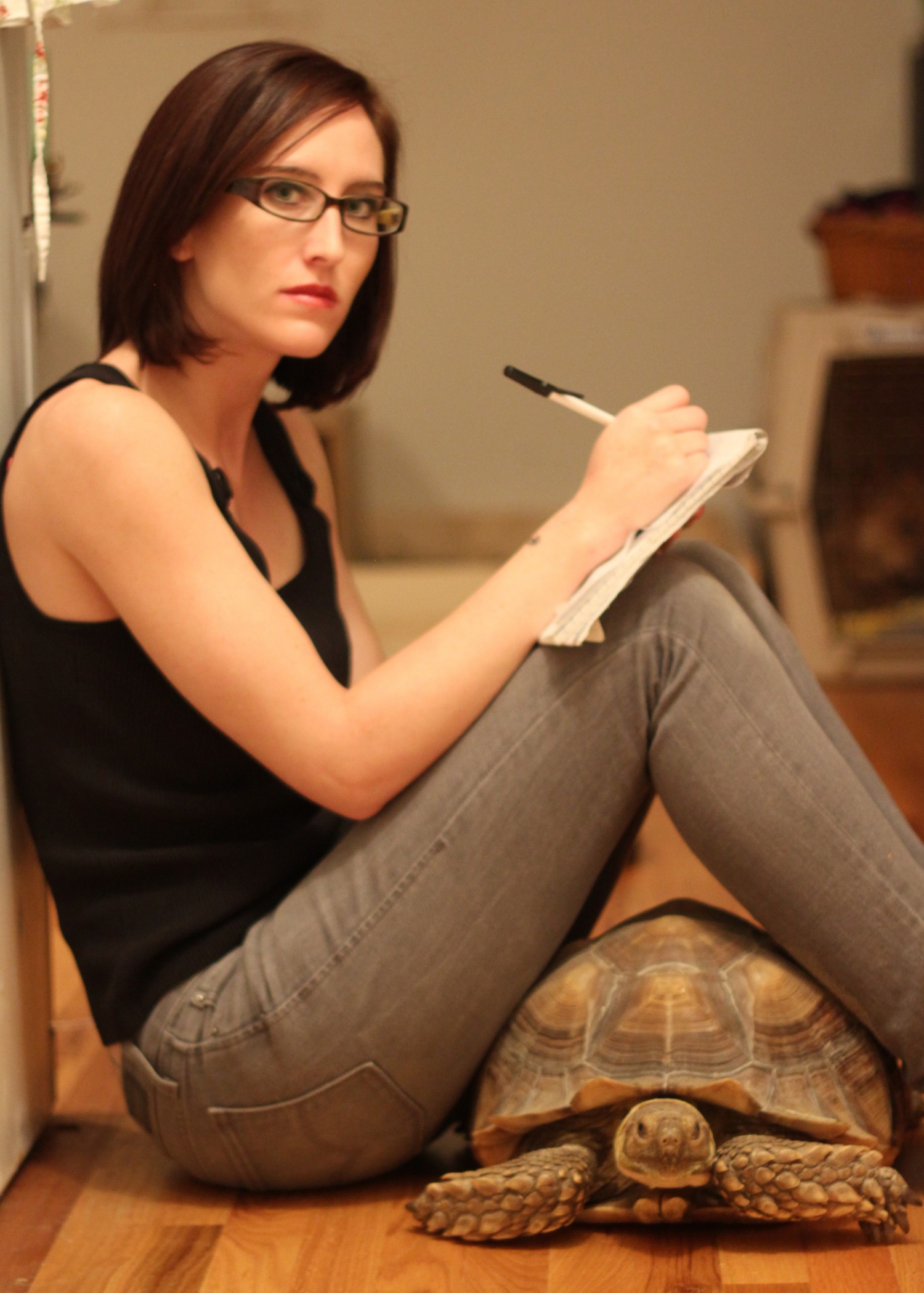
My question is: What is the African tortoise doing in the picture how did it get there?
Enjoy the journey
Other people play fantasy sports. I play fantasy newsroom. Here goes some of that:
It’s based in Atlanta (where the off the chain insane stream of “news” never ends!), it includes some design marvels, some web geeks, an ace seasoned and boiled investigative reporter or three, even a PI, a brilliant mediaographer, (but in my fantasy newsroom everyone is not only a brill writer but a photog too), one giant fridge filled with champage and beer and lots of snacks, great coffee, food galore, couches and bean bags, state of the art off the chain gorgeous gear and systems, wicked crafty IT geeks, a nursery for the moms and dads, with lots of helpers who are paid well, and a large state of the art conference room in the center of a big gorgeous open space where everyone is working collaboratively. Creativity is off the chain, and people are inspired to… report news in Atlanta like we’ve never seen it before. Sort of a Garden & Gun Magazine (online and some print) but for hard news. Features are cool too though, but they must be fascinating.
I figure about $5M in startup money could get me in this door. Maybe even less! Who’s in?
Fuck. I misspelled champagne. It’ll never happen. I’m going off to work in PR now. Whine.
Great article, we must remember another major factor that killed traditional print media is the online world.
Today’s consumer wants their news information instant-on demand. Gone are the days of the Traditional Newspaper.Smart newspapers’ are adapting hybrid formats of online + print to survive.
Superbly ilmaninutilg data here, thanks!
Reblogged this on legaltrexblog.
The Weekly Wrap | Sandee Jackson
Writers with journalism addictions | inked by a left-handed writer
Link Love, Vol. 11 - Break the Sky
Weekend Linkage: pink tablets and the romance of news | A Beginner's Guide
The Great Derangement Booms | Livin' on the Hedge
A different take on “why I left” | Crossing Over
Well written, and from the heart. And might I say that your story here can be relative to a number of changing occupations now.
Dinosaurs like Mike Foley, may remember a song title “Video Killed The Radio Star” and consider how technology has totally changed the way we work, think, and live our lives.
Will I leave? | Meghan Frick
Hi, I worked for The Times Of India, India’s top English newspaper in a small city. I worked my ass off editing, writing, reporting everything all alone as my boss and team where in another town. The newspaper got a bigger desk but chucked me out without any warning, they just closed the position. After 5 years in media I do not feel like going back to the field because media is now a tool for those who can use it for their own benefit. The thrill is just not worth missed lunches, the late hours, no family life and the tension.The high of being a journalist is not worth staying away from my little daughter anymore. Although the unavailabilty of a platform to bring out some worthy news rankles sometimes. Best wishes Ruby
I’m on the other side of the world and kissed a 20-year career goodbye almost 5 years ago. I have not looked back. All the points you make apply to papers here. It’s sad but very true.
Ink's low. Thinking impaired.
Thank you for sharing your story. As a career coach and mentor, I applaud your ability to take an active position in your career growth and not tolerate a situation that leaves you so miserable. I have several friends in the newspaper industry, so from a personal stance your words ring true. I’ve shared your article on my company Facebook Page and with some LinkedIn groups. Looking forward to receiving your blog.
Off The Wire: News for the Canadian media freelancer March 19-25