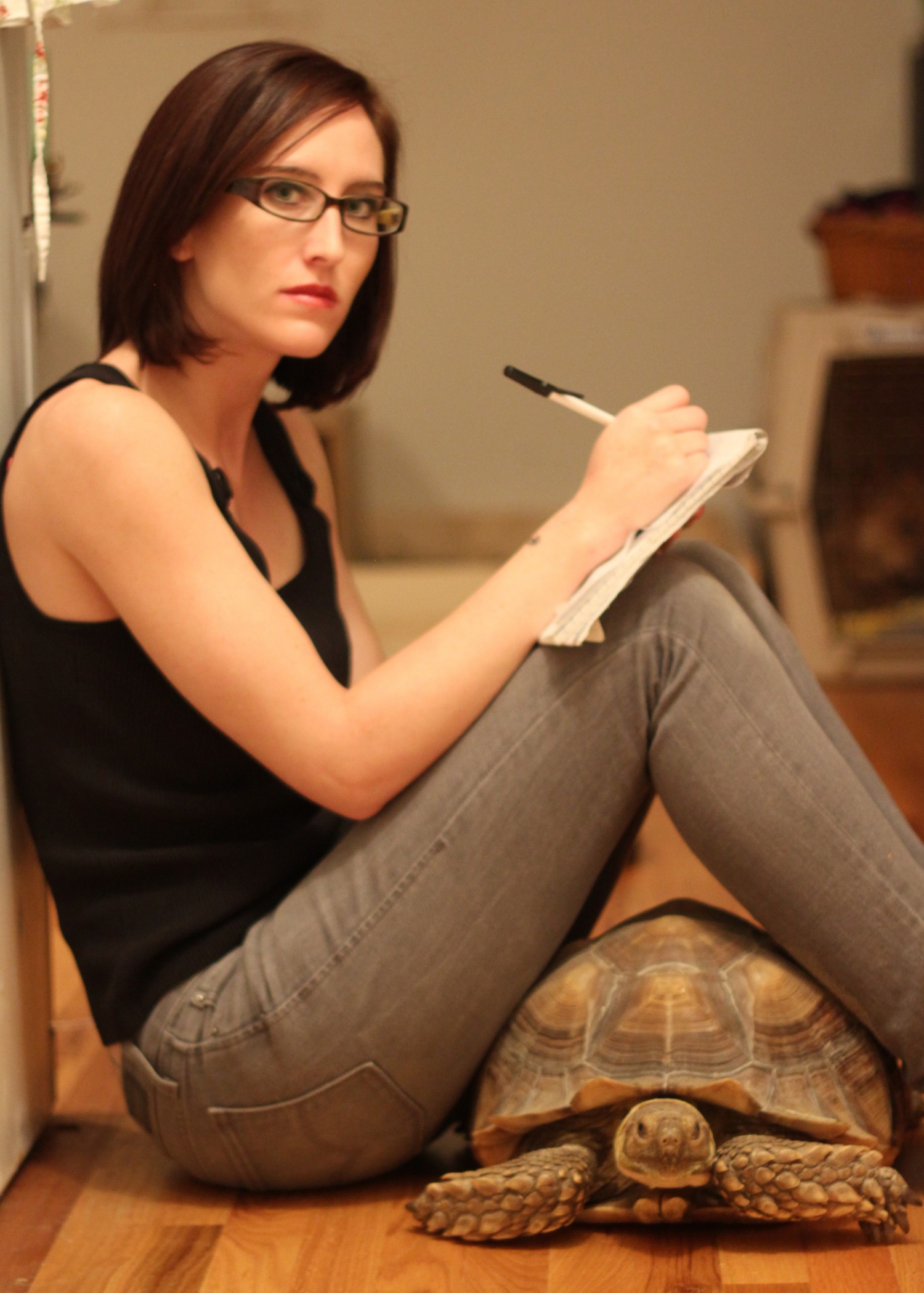

I get asked two questions several times a week, and I brush off both with a verbal swat.
One — because I’m in my late 20s, I suppose – is when are you getting married? And the other, because it seems like small talk, is why did you leave the newspaper?
I could answer both with a single word: Money.
But I usually deflect the marriage subject, wrongly justifying it as an acceptable passing question, with a practical reason: I’m not eager to have children. And I answer the news question with something to which my audience can nod along: “It didn’t seem like a sustainable career path.”
But that’s a cold and detached answer. I don’t feel cold and detached about news, and I only give that response under the assumption that people don’t want to hang around for the full story – ironically, the same reason newspapers aren’t really working anymore.
So here goes. This is the real reason why I left news: I finally came to accept that the vanity of a byline was keeping me in a job that left me physically and emotionally exhausted, yet supremely unsatisfied.
I started working at newspapers in 2005, the tail-end of the good days. During my first year of work, a Florida newspaper flew me down to the Mexican border to write about cocaine cartel murders back at home. We booked the first available flight, disregarding expense, and arrived before the investigators. That would not happen at a daily newspaper today.
I don’t think the Internet killed newspapers. Newspapers killed newspapers.
People like to say that print media didn’t adapt to online demand, but that’s only part of it. The corporate folks who manage newspapers tried to comply with the whims of a thankless audience with a microscopic attention span. And newspaper staffers tried to comply with the demands of a thankless establishment that often didn’t even read their work. Everyone lost.
People came to demand CNN’s 24-hour news format from every news outlet, including local newspapers. And the news outlets nodded their heads in response, scrambling into action without offering anything to the employees who were now expected to check their emails after hours and to stay connected with readers through social media in between stories.
There was never such a thing as an eight-hour workday at newspapers, but overtime became the stuff of legend. You knew better than to demand fair compensation. If any agency that a newspaper covered had refused to pay employees for their time, the front-page headlines wouldn’t cease. But when it came to watching out for themselves, the watchdogs kept their heads down.
A little more than a month after I left the newspaper, I went to Key West for a friend’s wedding. I realized on the drive home that I had never taken a vacation – aside from a few international trips – without some editor calling with a question about a story. I remember walking down Fifth Avenue in New York on my birthday a few years ago, my cell phone clutched to my ear and mascara running down my face, as an editor told me that he thought the way I had characterized a little girl with cancer needed to be sadder.
To many people, and even to me, part of the draw of news is that it never stops. You wholly invest yourself in a story – until something bigger happens. The only guarantee in any workday is the adrenaline rush. And even when the story isn’t terribly thrilling, you’ve still got a deadline to contend with, a finite amount of time to turn whatever mess you’ve got into 12 to 15 column inches that strangers would want to read.
The flip side to the excitement is the burnout. You’re exhausted, and you’re never really “off.” You get called out of a sound sleep to drive out to a crime scene and try to talk with surviving relatives. You wake up at 3 a.m. in a cold sweat, realizing you’ve misspelled a city councilman’s name. You spend nights and weekends chipping away at the enterprise stories that you never have time to write on the clock.
Everyone works so hard for so long and for such little compensation. The results are dangerous.
We saw it with the Supreme Court health care ruling, as our national news leaders reported the decision incorrectly. We saw it with the Newtown massacre, when initial reports named the suspect’s brother as the shooter. Major news outlets are no better than bloggers if they adopt a policy of getting it out first and correcting it later. They don’t have the money to fend off the resulting lawsuits, and they don’t have the circulation numbers to allow people to lose faith in their product.
Newspapers always have been liberal places where people work hard for little pay, because they believe in the job. They always could empathize with the poor. But pay continues to dwindle to the point that I wonder what kind of person, today, enrolls in journalism school?
I took a pay cut when I moved back from Florida to Charleston, expecting to make up the difference quickly. Instead, I quit my newspaper job at 28, making less money than earned when I was 22.
I can’t imagine anyone outside of an affluent family pursuing a career with so little room for financial growth. And I wonder: Would that well-to-do reporter shake hands with the homeless person she interviews? Would she walk into a ghetto and knock on a door to speak with the mother of a shooting victim? Or would she just post some really profound tweets with fantastic hash tags?
Maybe that’s what people – editors and readers – put at a premium now. Maybe a newsroom full of fresh-from-the-dorm reporters who stay at their desks, rehashing press releases and working on Storify instead of actual stories, is what will keep newspapers relevant.
But I doubt it.
The day I announced my resignation, I had to cover the alcohol ban on Folly Beach. The photographer working the story with me said very little about my decision, except for one heartbreaking statement: “But you were made to do this.”
I had thought so, too. For so long, people had asked me what I would do if my name wound up on a future round of layoffs, if my paycheck were furloughed into oblivion.
I had spent countless hours late at night trolling online for something else that appealed to me. But covering news was the only thing I ever had wanted to do and the only thing I ever had imagined doing.
I started writing stories for my local newspaper when I was 16. I worked seven internships in college, eager to graduate and get into a newsroom. I left school early, school that was already paid for with enough scholarship money that I took home a check each semester, so that I could lug my 21-year-old life to West Palm Beach and work the Christmas crime shift alone in a bureau. And I wouldn’t change that decision for anything.
People in news like to describe a colleague’s departure, especially into a public relations or marketing job, as “going to the dark side.” When word of my resignation traveled through the newsroom, I heard “dark side” references over and over, always with a smile and a wink. I couldn’t help but resent them. But I looked over my cubicle each time and flashed my best Miss America grin instead of the middle finger poised over my keyboard.
I now write for the fundraising arm of a public hospital. Anyone who thinks that’s going to the dark side is delusional. And as my former coworkers ate farewell cake on my last day at the paper, a few of them whispered, “Do they have any other openings over there?”
I don’t know a single person who works in daily news today who doesn’t have her eyes trained on the exit signs. I’m not sure what that says about the industry, but I certainly don’t miss the insecurity.
Sure, it took me a while to get used to my new job. When I go to parties, I no longer can introduce myself as a reporter and watch people’s eyes light up. Instead, I hear how people miss seeing my byline. No one misses it more than I.
News was never this gray, aging entity to me. It was more like young love, that reckless attraction that consumes you entirely, until one day – suddenly — you snap out of feeling enamored and realize you’ve got to detach. I left news, not because I didn’t love it enough, but because I loved it too much – and I knew it was going to ruin me.
 Sticky Valentines
Great story, Allyson, and a wealth of great comments to go with it. I started working in the industry in 2005 as well and saw how quickly things changed in just a few years. You’re absolutely right: the work became more and more about keeping up with the impossible speed of the internet. As a result, it seemed we became increasingly reliant on PR reps and press releases as our primary sources of information. I began to feel like I was simply a funnel through which all this messaging flowed through. Of course, there are still great journalists out there working around these obstacles. But I can’t imagine the situation as a whole has gotten any better since I left my regular job a few years ago.
Been there. Still am there…
I left the newsroom for the “dark side” 23 years ago, but must admit that once in a while I still miss the adrenaline rush. And although I could no longer introduce myself as a newsman, I couldn’t help looking at things like a newsman. I suppose once you’re married to journalism, you could never divorce yourself from it no matter how long it may be. I didn’t miss the low pay and the long hours, though.
News blues | RetropolitanBlog
News blues | RetropolitanBlog
I can so relate. Once upon a time I wrote fundraising copy for many, many clients including hospitals. Now, I’m the editor of a popular, weekly, community newsmagazine. The words weekly and community seem to imply that the pace should be relaxed. Instead they shout small staff, lots of work. so here I am at 10 p.m. editing a paper that I spent all day working on. Love the job, but sometimes I miss my life.
See. I’m so tired and blurry-eyed that I typed a period where a comma should have been. Sigh.
I left Knight-Ridder in 1998. You capture the way it felt – the way it still feels – perfectly.
Amen, Greg Smiley. I was fortunate enough to have had a good long run in happier, more exciting, more satisfying times, but when K-R sold out to McClatchy, the handwriting began to appear on the wall, and I fled the industry for a life of fixed-income retirement in 2008. I so miss the newsroom, it still makes me sad 5 years later…and probably will till the day I die. Nothing is killing newspapers. They’re all committing suicide. Allyson nails it…perfectly.
Great post, Allyson. This describes me to a T (except I’m a touch older and still unwilling to give up on this thing — I’m a slow learner).
Great post, Allyson. This describes me to a T (except I’m a touch older and still unwilling to give up on this thing — I’m a slow learner).
Good solid points here. However, most former newspaper reporters, including myself, tend to generalize about what’s wrong with newspapers and how they will never get better. There are still plenty of new folks who replaced us (or who are still around) who feel the same passion and continue to do good work and get compensated well.
The biggest issue here though is that you stereotype those who come from “well to do” backgrounds being afraid to shake hands with a homeless person or talk to someone of a different background. This couldn’t be further from the truth. People from upper middle class or higher backgrounds have always gone into journalism. Molly Ivins comes to mind – came from a wealthy oil family, and she was one of the most important contributors to journalism in the 20th century.
Thank-you. I graduated with a worthless journalism degree. I started a cleaning business and have made more in the first three months than I did the whole time I worked journalism jobs. And I get to spend time with my kids.
I also cleaned houses after I graduated with a journalism degree. When I went into journalism, no one told me that I wouldn’t be able to pay rent and buy groceries.
Wonderful post. I’m wrapping up my undergraduate degree in journalism this year and am continuing my education next year– to become a teacher. I love journalism, I respect it, but I have many similar feelings that you do and want to pursue a career I will be genuinely passionate about.
That was beautifully said. I was a reporter, who started at the Daily Illini in Champaign and moved on to working for the Daily Herald, SunTimes News Group and the Chicago Tribune over a five year period. I too left journalism, officially, at the age of 28. I left it for all of the reasons you stated above. I went to law school and started a new career. I’m now 30 and I am still in school and I still miss that byline and the drug of journalism. I saw people walk down the stairs with boxes, a salary which was pitiful and my vacations comprised of mandatory furlough days. Over a short period of time, it became a game of quantity, rather than quality. It saddens me.
Law school, there’s a school even more hopeless than journalism. Way to go.
» Why someone left news, and why we should stop others Rewired Reporting
Great points. I worked as a news reporter last year and my sentiments are the same as yours – about news. I’m now working as the arts editor of a paper and hoping to go into magazine journalism, which I don’t think is a dying art at all. It makes me sad to know that so many news reporters are constantly looking for an exit. At the same time, the lack of life and money I see in my future worries me. I was writing for a school paper that published 2 times a week and I worked about 40 hrs/week and almost had no time to myself or for anyone… everything got put on the back burner so easily, but writing is my passion and I’m not giving up on it yet.
Allyson, I left the same paper four years ago that you left. I’m a lot older, and had different reasons for going. It was all I had wanted to do since middle school. I still miss it, and I find that thirty years of writing and editing has left me with little in the way of marketable skills. I hope you hear a calling soon that gets you just as excited as journalism did. I hope I do, too.
When I was at university studying journalism, a political science professor left a humorous comment on a paper. “You have an unfair advantage over most of the students at this university. You can write.” It’s worth remembering that the ability to do original research and write engagingly isn’t just a marketable skill applicable to a wide range of jobs but an unfair competitive advantage.
All I hear from executives is that they need people who can condense information and write clearly. Your skills are highly applicable to many fields, and quite marketable. Lean in!
You will always be a good writer, however you ply your talents….good for you!
Excellent post. I left television news (also headed the way of newspapers) where I felt overworked and exhausted all the time to find something more meaningful for myself. I’m a teacher now and it’s amazing, I actually get vacation where no editors call and I never get called in the night to be at work at 2 am. I thought I was made for it too, but I couldn’t deal with the schedule, the thankless hours of work and relocating to move up and up every two or three years. Thanks for sharing!
The story of my professional life
So well said! I feel like I’m reading about my own life. Replace “newspapers” with “local TV stations” and our 20s are eerily similar, and this article reads like you invaded my mind and stole my thoughts. When I left my last news job I asked my favorite news director if he would be a reference for me as I applied for a job in the video/communications department at my church. His answer was, “yes, but I wish you wouldn’t leave the business.” He is now at one of my “goal” TV stations and I sometimes wonder “what if”… but it’s not long before I come back to reality. Happily.
About last night : TERCIUSBUFETE.COM
Wow.
I’m speechless.
Thank you. Thank you for posting this.
I know it’s already been said 270 times, but…..excellent post. You obviously still have some fight left in you to write. Just keep that passion and it won’t matter what job you have.
Though incredibly frightening for me to read, your brutal honesty was humbling and oddly refreshing. I felt like I could breathe after reading this, like I’d been holding it in, waiting for somebody to break the awkward silence about the elephant in the room.
As a journalism student, about to graduate this May, these are very real questions that I have, which no one can seem to answer. But mostly, teachers and advisors and journalists inore the issue, hoping it will not come true if they don’t speak it. Or they just outright lie to me. Why is this the first open discussion I’ve heard about this? Is my degree going to be worth anything? Will it kill my free time and passion for writing? Can I support my family on it? Did I just waste 4 years, when I could have been doing something else? (making money, writing on my own, becoming a novelist, blogging etc.)
sharing in your frustration,
David
Be honest with yourself about what people may want to read about. Then become an expert on that thing. And write about it. A lot. It’s still journalism, just not community journalism.
Great article! I have always been on the receiving end of newspapers, taking time each morning to read almost the entire newspaper while enjoying my toast and coffee. And when we also subscribed to the local bi-weekly for its sports coverage and neighborhood news. But we haven’t taken a paper for over ten years now. The biggest reason . . . we don’t like reading opinion that’s being passed off as news. Or news that is glamorized or sensationalized. It’s a difficult thing to report the news truthfully without injecting human emotion and opinion, but I will continue seeking out the source that does that the best.
The world breaks everyone’s heart, eventually. Alas, with you, it started early.
Alyson, what a wonderful piece of writing is in this post. Your perspective is wise, thought-provoking and so very heartfelt. Although there are differences, profession to profession, after 25 years I left an industry that changed too much also, and I felt a deep disappointment about it that is parallel in many ways to yours. That industry was illustration, as it was before the digital era. I found a new professional life as a fine artist and portrait painter that has thankfully been very enriching to me emotionally, but there were many dreams as an illustrator so important to me that I never saw fulfilled, and had to release, even after that length of time. Perhaps one day I will still do a children’s book, for example, and yet now that I have expanded my horizons as a creative person I am blooming once again in new ways. It has not been an easy life path to be an illustrator or a fine artist, but like you, I don’t regret my decisions, and I would not trade my experiences. I sincerely hope it will work out in time for you as you wish.
Still a (French news) journalist. Still loving it. Shaking hands daily with people whom I’d never have met otherwise. Sometimes poor, sometimes rich, most of the times smart, and always passionate and fascinating. If you’re willing to turn a passion for researching, interviewing, writing and communicating into a career, you need to respect yourself, know your limits, and work for the passion of it, not for the money it brings. A solid journalist with rigor and passion not only eats their lunch and take their break, but they also get fully compensated for the quality of their work and their overtime is recognized. They just need to build their path as they go.
As for the dark side, I consider it dark only if you can’t be fully transparent. If you need to lie or hide part of the truth, as a reporter or as a PR-person, than you are on the dark side. On the bright side, you’re digging for original stories and you turn them into great reading, listening or viewing medias. I think you can be on the bright side, even if you are into public relations, internal communication or any other form of communication profession.
Thank you for this wonderful post. I’m still a journalist but I can feel for you esp this one – I left news, not because I didn’t love it enough, but because I loved it too much – and I knew it was going to ruin me. – I’m in the process of leaving the news now as I’m building an online biz which to me is more aligned with my life’s purpose
When I graduated from one of the top broadcast journalism programs I had two options to me: go make less than I would at McDonald’s working crappy hours in a small TV market or take a prime time assignment desk manager in a major market (for a little more money) and hope that somehow, some way I could find my way off the desk to do what I really wanted to do… Report. But as a single mom at the time, neither option was viable. Between the salary and hours, I ended up doing something else entirely. Sometimes I regret what could have been, but then I read an article like this and see all my former classmates dropping like flies out of the media, and I realize it was inevitable from the get go. It’s a sad and tragic truth.
There are so many, so, so many of us feeling the same…
Spot on. I wasn’t a news reporter; merely a features reporter. However, I heard enough of news editors barking and boasting to know that not all was rosy in the cops/education/govt world. And, if I ever forgot how difficult life was for those reporters on the other side of the wall, the nasty squawking of the police scanners always reminded me.
Like Allyson, I didn’t leave the newspaper biz because I stopped loving my work — I loved my work. In my 18 years of working in places ranging from K-Mart to Coldstone Creamery, nothing even comes close to the magic of reporting…and it’s not even the magic of being at a moment of history-in-the-making. It’s the magic of sitting in a stranger’s home, feeling yourself slowly melding into this person’s life…feeling their heartbreak while they watched their world fall apart, or feeling those goosebumps race across your skin as they talk about the crowning moment of their life. For me, the magic and thrill of reporting was experientially entering into a person’s life so that, that same day, you could rush back to the newsroom and let fly with descriptions and details that brought the light of truth on a life that may otherwise never have the chance to be put to page for all to read.
But, the truth is, that well of empathy and skill always fights to keep its head out of the guillotine. In our newsroom, there was the constant pressure to fill pages. There was the constant pressure to beat out page counts of papers in markets at least twice as big as ours. There was the constant reminder that other papers were folding, and that we should be happy we have jobs (after a while, gratitude demanded is nothing more than a threat). There was the parsing of the previous year’s raise rate. There was the constant ache of an understaffed newsroom limping along, covering for the rightfully burned-out and frustrated colleagues who left in defeat. There was that looming pressure of culture’s redefinition of journalism, where “reporter” began to mean the same thing as “blogger,” “Tweeter” and “Perez Hilton.”
All this being said, the real crusher is this: I viewed — and still view — journalism as an art form. Storytelling. The magic of experiential empathy, while maintaining the highest standard of accuracy and clarity. That art, as we all know, is dying (thank you blogger, tweeter, and Perez Hilton…not to mention the paychecks-turned-punch lines we all receive[d]). Of course, it should come as no surprise to me that we are underpaid, underappreciated and overworked. We are, after all, artists.
Wow. That was really insightful, and your writing has such a good flow and cadence to it. It would be amazing if you wrote narrative for a documentary. You unveil details at a very comfortable speed, and each is important to the story you build.
I know now that news is over. It makes me tremendously sad, too, because it was such a good way to keep in touch with how the world was feeling out there. It’s easy to get the facts and the numbers, but it’s not always so easy to be touched by the heart of a stranger in a fleeting moment and share their world with them. This is what good reporters in the field who are given time to write and craft can offer.
Or if you wrote a book, telling the story of where news came from, and how and when it all went wrong. I’d read that, too.
While I probably agree with the overall sentiment of your piece and can relate to your anecdotes, there are far too many sweeping generalizations that really piss me off. I know you’re not a journalist any more, but that’s bad reporting.
Bullshit. That’s the God’s-honest right there.
OK, your handle tells me you love to stir it up, and that’s a job somebody has to do, but can you at least say if you are or have been a reporter at a print daily? I’m sure it varies from newspaper to newspaper, and the things Allyson said (particularly the resentful aside about wealth) may piss you off, but I’ve been there. So close, in fact, that the hatchet man who eviscerated the Times-Picayune in NOLA used to be the publisher of my newspaper. Close call that. You cannot please all of the people all of the time, and news agencies and media across the board (pretty much) are racing headlong toward that unachievable goal. Heaven help print.
Why I left news – Allyson J Bird | RedKaten's Musings
and i thought that only happens in the Philippines.
allyson…
amazingly similar story here, in canada. a disillusioned tv reporter by 26.
the funny thing is, after quitting, this may be the best thing you’ve ever written.
it’s awesome the art you can, and will naturally, create when you don’t have to bend it and bash it so you can exchange it for a paycheque.
i recognize good stories everywhere now. before i was so stressed, i tuned that out.
your love of writing news, like mine, may be too personal to allow manipulation from corporate execs who don’t see words, but only dollars and cents. and you’re probably too proud to be lumped in with the byline and face-time craving hacks, that are infiltrating newsrooms at a rapid rate.
you now own your passion. and so do i. i shoot video for a living (still in tv), and now all of my words are actually mine.
and on the bright side, maybe your post inspires some positive change. it’s not too late.
cheers.
Outstanding post! Very, very similar feelings upon leaving TV almost 15 years ago. I now run communications for a large national nonprofit.
I wish they had told us in journalism school that we could make a positive difference in the world by working in government or at a nonprofit. I’ve done both, and have felt just as fulfilled as when I was in the news business.
Excellent piece. I don’t know a single journalist who wouldn’t head to the dark side if the price was right.
My first broadcast job, commentating on county cricket in England in 1988, paid 70 pounds a day. A few weeks ago I covered an international rugby test for a highly respected British national newspaper – their fee? 70 pounds. After 25 years freelance rates are effectively half or less of what they were. It hardly encourages the freelance or the industry.
Same thing happening across globe, Society is to blame, Everyone chase money and where all the sin lies.
I am from India and can feel exactly the same here..
A list of posts I've been meaning to write...
Sadly, I completely understand all of this. I’m a journalist, as well, and the newspaper where I worked for about six years has become a ghost of its former self. I’m lucky to work for a relatively stable employer now, but nevertheless everyone in the newsroom has horror stories, friends with horror stories and generalized fears about the future.
While I definitely get where you’re coming from, let’s be honest here. You could substitute any industry, including the non-profit world, for “journalism” and make the same observations…or have you noticed that we live in a country where corporations have been given free speech rights by our Highest Court and unions designed to protect workers have been vilified?
Ex-reporter, a few years older than you. Newspapers killed themselves. News will live on —- but hardcore, focused community journalism is what will not recover. At least in the short term. People simply aren’t willing to pay for it. Bottom line. Good luck with your careers (ex-reporters on this board) — and don’t focus your future exclusively on “writing for a living.” As a reporter, the biggest skill I developed was learning about new things very quickly. It’s the subject people care about first, not your writing. As far as writing fiction for a living —- too many writers, not enough readers. Broaden your minds. A lot of possibilities out there.
Le cynisme nous guette : Nathanaël Vittrant
This is a perfect description of how I felt as a reporter. I miss it every day.
I worked as a one-woman band in a very small market. Most of the time I felt as though I was the only one who cared about the people in the stories. I worked with reporters who came from affluent families who would never shake the hand of the homeless man they just used for an interview, trying to get that one great story to put on a shiny new resume reel. I worked with reporters who treated the scene of a mass murder as a photo opp to post to Facebook. I listened as one reporter told me how excited she was to have a murder on her beat so that her work was done foe the next six months. Meanwhile, I was busy interviewing people making a difference in the community, working to inspire and change things in their hometowns. It was very frustrating, but I loved being able to share the stories that stoked the most interest on our Web site.
I left news and now work as a student media adviser at a community college. I love working with the students, but there is still a part of me that feels the same about not being able to see the excitement in someone’s eyes when I would tell him/her I’m a reporter. I miss going on air with a story that I knew people were going to love/care about/share/use as inspiration. There was something very fulfilling in that, but I hated the person I was becoming working in the newsroom not making enough money to pay the rent.
Reporting was always my passion and my dream, but I’ve found other ways to share stories (which are unpaid, go figure) with others. I’d love to work in the business again, but that’s up to fate right now.
As a former community newspaper reporter and editor, you brilliantly brought back the sadness I experienced for years after leaving the business. (See, that’s the difference: When I started out, it was a labor of love, but when I jumped ship, it was a business.) You point the finger of shame exactly where it deserves: the newspapers and its corporate management whose solution to everything was “cut the editorial department.” I left before the Internet took off, so corporate management at the time claimed that “Nobody reads anymore!” Obviously, that was utter nonsense.
I can relate so much to you. I am also making less money now than I did a few years back… in the very same job. I had to evolve on the side, becoming a video journalist for my paper’s website, an endeavor my boss welcomed, but was not willing to put a price on. Hopefully the experience will get me a gig elsewhere.
Who is Allyson Bird?
Why she left news… | Piedmont Publius
I left reporting. I’m looking at law school. This article articulates everything I felt so perfectly. Breaks my heart.
Lawyers are having a brutal time. Read about it. Why do all journalists default to law?
Be careful, Hollis. I, too, left reporting. I went to law school. After law school, I spent 9 years practicing law, and discovered that the clients I preferred to represent had to hold neighborhood bake sales and apply for grants to pay my (sharply discounted) bills. I had to deal with other lawyers who had no problem with flat-out lying. I decided that law was a terribly bad turn in the road for me, and now I consider myself a “recovering lawyer.” I can’t even count the number of lawyers I have met who have told me they wish they had gone into journalism. Ultimately, that’s what I did. Again. And that’s what I do now.
Hi Allyson, I’m wondering – in an ideal world – what you’d like to see return that would have turned things around for you. Would changes in outlet’s corporate structure help or is there just too many other issues in the journalism world now?