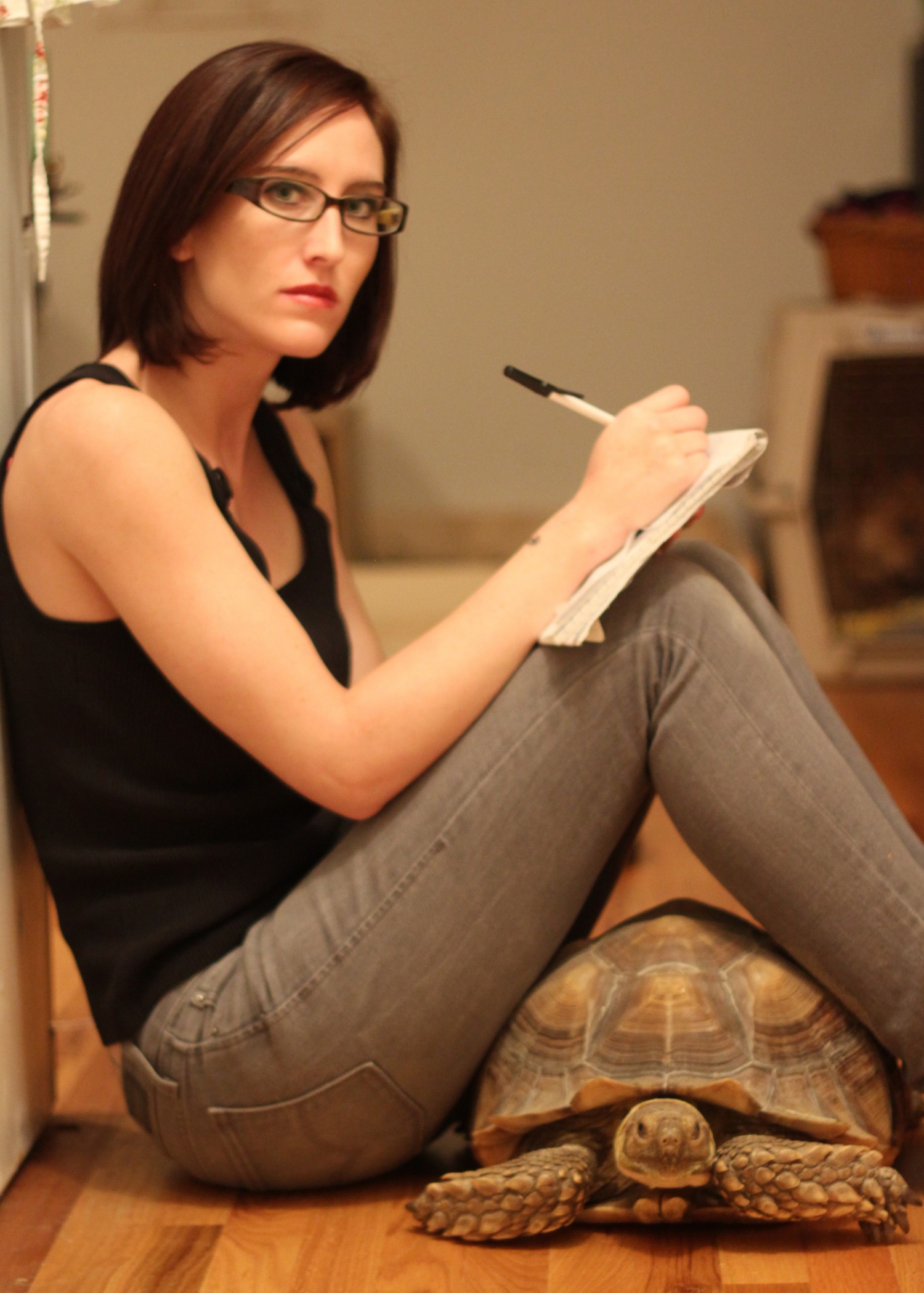

I get asked two questions several times a week, and I brush off both with a verbal swat.
One — because I’m in my late 20s, I suppose – is when are you getting married? And the other, because it seems like small talk, is why did you leave the newspaper?
I could answer both with a single word: Money.
But I usually deflect the marriage subject, wrongly justifying it as an acceptable passing question, with a practical reason: I’m not eager to have children. And I answer the news question with something to which my audience can nod along: “It didn’t seem like a sustainable career path.”
But that’s a cold and detached answer. I don’t feel cold and detached about news, and I only give that response under the assumption that people don’t want to hang around for the full story – ironically, the same reason newspapers aren’t really working anymore.
So here goes. This is the real reason why I left news: I finally came to accept that the vanity of a byline was keeping me in a job that left me physically and emotionally exhausted, yet supremely unsatisfied.
I started working at newspapers in 2005, the tail-end of the good days. During my first year of work, a Florida newspaper flew me down to the Mexican border to write about cocaine cartel murders back at home. We booked the first available flight, disregarding expense, and arrived before the investigators. That would not happen at a daily newspaper today.
I don’t think the Internet killed newspapers. Newspapers killed newspapers.
People like to say that print media didn’t adapt to online demand, but that’s only part of it. The corporate folks who manage newspapers tried to comply with the whims of a thankless audience with a microscopic attention span. And newspaper staffers tried to comply with the demands of a thankless establishment that often didn’t even read their work. Everyone lost.
People came to demand CNN’s 24-hour news format from every news outlet, including local newspapers. And the news outlets nodded their heads in response, scrambling into action without offering anything to the employees who were now expected to check their emails after hours and to stay connected with readers through social media in between stories.
There was never such a thing as an eight-hour workday at newspapers, but overtime became the stuff of legend. You knew better than to demand fair compensation. If any agency that a newspaper covered had refused to pay employees for their time, the front-page headlines wouldn’t cease. But when it came to watching out for themselves, the watchdogs kept their heads down.
A little more than a month after I left the newspaper, I went to Key West for a friend’s wedding. I realized on the drive home that I had never taken a vacation – aside from a few international trips – without some editor calling with a question about a story. I remember walking down Fifth Avenue in New York on my birthday a few years ago, my cell phone clutched to my ear and mascara running down my face, as an editor told me that he thought the way I had characterized a little girl with cancer needed to be sadder.
To many people, and even to me, part of the draw of news is that it never stops. You wholly invest yourself in a story – until something bigger happens. The only guarantee in any workday is the adrenaline rush. And even when the story isn’t terribly thrilling, you’ve still got a deadline to contend with, a finite amount of time to turn whatever mess you’ve got into 12 to 15 column inches that strangers would want to read.
The flip side to the excitement is the burnout. You’re exhausted, and you’re never really “off.” You get called out of a sound sleep to drive out to a crime scene and try to talk with surviving relatives. You wake up at 3 a.m. in a cold sweat, realizing you’ve misspelled a city councilman’s name. You spend nights and weekends chipping away at the enterprise stories that you never have time to write on the clock.
Everyone works so hard for so long and for such little compensation. The results are dangerous.
We saw it with the Supreme Court health care ruling, as our national news leaders reported the decision incorrectly. We saw it with the Newtown massacre, when initial reports named the suspect’s brother as the shooter. Major news outlets are no better than bloggers if they adopt a policy of getting it out first and correcting it later. They don’t have the money to fend off the resulting lawsuits, and they don’t have the circulation numbers to allow people to lose faith in their product.
Newspapers always have been liberal places where people work hard for little pay, because they believe in the job. They always could empathize with the poor. But pay continues to dwindle to the point that I wonder what kind of person, today, enrolls in journalism school?
I took a pay cut when I moved back from Florida to Charleston, expecting to make up the difference quickly. Instead, I quit my newspaper job at 28, making less money than earned when I was 22.
I can’t imagine anyone outside of an affluent family pursuing a career with so little room for financial growth. And I wonder: Would that well-to-do reporter shake hands with the homeless person she interviews? Would she walk into a ghetto and knock on a door to speak with the mother of a shooting victim? Or would she just post some really profound tweets with fantastic hash tags?
Maybe that’s what people – editors and readers – put at a premium now. Maybe a newsroom full of fresh-from-the-dorm reporters who stay at their desks, rehashing press releases and working on Storify instead of actual stories, is what will keep newspapers relevant.
But I doubt it.
The day I announced my resignation, I had to cover the alcohol ban on Folly Beach. The photographer working the story with me said very little about my decision, except for one heartbreaking statement: “But you were made to do this.”
I had thought so, too. For so long, people had asked me what I would do if my name wound up on a future round of layoffs, if my paycheck were furloughed into oblivion.
I had spent countless hours late at night trolling online for something else that appealed to me. But covering news was the only thing I ever had wanted to do and the only thing I ever had imagined doing.
I started writing stories for my local newspaper when I was 16. I worked seven internships in college, eager to graduate and get into a newsroom. I left school early, school that was already paid for with enough scholarship money that I took home a check each semester, so that I could lug my 21-year-old life to West Palm Beach and work the Christmas crime shift alone in a bureau. And I wouldn’t change that decision for anything.
People in news like to describe a colleague’s departure, especially into a public relations or marketing job, as “going to the dark side.” When word of my resignation traveled through the newsroom, I heard “dark side” references over and over, always with a smile and a wink. I couldn’t help but resent them. But I looked over my cubicle each time and flashed my best Miss America grin instead of the middle finger poised over my keyboard.
I now write for the fundraising arm of a public hospital. Anyone who thinks that’s going to the dark side is delusional. And as my former coworkers ate farewell cake on my last day at the paper, a few of them whispered, “Do they have any other openings over there?”
I don’t know a single person who works in daily news today who doesn’t have her eyes trained on the exit signs. I’m not sure what that says about the industry, but I certainly don’t miss the insecurity.
Sure, it took me a while to get used to my new job. When I go to parties, I no longer can introduce myself as a reporter and watch people’s eyes light up. Instead, I hear how people miss seeing my byline. No one misses it more than I.
News was never this gray, aging entity to me. It was more like young love, that reckless attraction that consumes you entirely, until one day – suddenly — you snap out of feeling enamored and realize you’ve got to detach. I left news, not because I didn’t love it enough, but because I loved it too much – and I knew it was going to ruin me.
 Sticky Valentines
Low Pay + Low Reward: Is That What Awaits Future Journalists? | Sonya Chudgar
Excellent post. I thoroughly remember being on call and never being able to completely relax. I left the TV side two years ago and don’t regret it at all, despite being laid off from a media relations job in November. I entered the biz in 2006–about a year and change before the recession. I know all about taking on additional tasks and not being paid an extra penny. I’ve missed news at times, but was reminded of another reason I left this winter when I could actually sit at home and watch snow fall in comfort! The news business has lost a lot of talented people in recent years and, unfortunately, I don’t see that trend changing any time soon.
Thank you for writing this. Although I’m in broadcast, I share many of these same sentiments. Well said.
Reblogged this on Words From D Wise and commented:
Allyson Bird had the courage and eloquence to write everything I’ve thought about the decision to leave the traditional newsroom. Wonderful writing!
I am a recently laid off journalist. I had an opportunity to leave the business before the hammer fell on me, but I choose to stay. Why? Because there is nothing like being a journalist in the world. It is more than a profession; it is a calling. When I saw friends leave to land jobs that paid twice as much as what I made, I did not blink — I felt I was the lucky one. I was doing something special, doing something that matter. I worked in the private sector for a while, but I always came back to journalism. There is nothing that can compare to interviewing a person who is special and being able to express that specialness in a way that touches someone else. I love telling stories, and by God, I will miss it. I do not regret the career path I took. I would have gladly died with my fingers stained with ink.
Michael, as someone who was in daily newspapers for 25 years, I completely agree that there’s nothing like being a journalist. The fact that you still have that same love for the profession is typical of what drives so many people to work so long for so little.
I loved what I did, and two years out, still miss the newsroom, but I like knowing that there’s a reasonable chance that my employer will be around in a year or three.
Allyson, I’m a 30-something, burnt-out IT guy and I couldn’t agree more with what you’ve written. As far as I can see, the world just doesn’t want to pay for, or allow time for, quality work. The world seems to be in a race to the bottom. I plan to follow in an IT version of your footsteps; work for a non-profit or community organisation for less money but, hopefully, a nicer life and better world. Good luck for the future.
Peter, I’m a 40 something no-longer-burnt-out IT guy and all I can say is do it NOW. I stayed until the layoffs, there was no reason to leave as the company’s direction changed… a nice paycheck for a finally reasonably paced work load. No more 24×7. When the hammer fell, there were other life changing events simultaneously focusing my thoughts. My mother passed away and my second son was born. I dug my heels in and took a year off. A WHOLE year. I spent it with family. I thought about my mother often but kept moving forward. My growing family afforded me so many opportunities for cherished memories. I will never be able to express how amazing that year was. Eventually I got back into the work swing of things, taking my time and picking my short term assignments carefully. I finally landed at a small pharmaceutical trying to help those with cancer (AML) through to remission and successful transplant. We are succeeding. I am succeeding. I am making a difference both at work and to individuals who I will never meet. My mother who died of cancer is almost as proud of me as I am of myself. I will *never* look back. There is so much ahead of me.
This is dead on. I spent ten years in news, tv instead of newspaper, but the problem is exactly the same. It’s insane how hard you work and A) how little you get paid and B) how terribly you’re treated by your employer. I went to the “dark side” and immediately got a $22,000/year raise, 3 weeks of vacation a year and the bliss of knowing I’d never spend another holiday at work or another weekend fearing that I’d get called in to work. Makes me wonder why I waited so long.
“I went to the “dark side” and immediately got a $22,000/year raise”
Hmm…this and other factual data from other posters makes a person wonder who the “dark side” really is…
…the evil private sector which pays its employees more or…
…the morally preening, political-class pumping media populated by naive, financially exploited youngsters.
Perhaps a *lot* of dreamy, egocentric teenage assumptions were wrong.
I’m prrrreeeetty sure I worked with you at some point.. haha
Love it or leave it: Three young journalists explain their career emotions | Alan's Alley
Lots has changed since I was a newsroom cub, yet you voice familiar sentiments about what originally drew you to the profession.
I blog about that and what two commentators in their 20s say elsewhere. http://bit.ly/Ze8pM7
I started writing for a downtown newspaper when I was still in high school and was paid a penny a word. I was over the moon. One Journalism degree later I was pounding out stories at papers and mags – making more than a penny a word but not enough to get by. I now work in TV. I used to have a passion. I now have a job. .
I think this more applies to newspapers and not other media. Today, I saw a listing for a managing editor at a magazine and the salary was $85K. The editor in chief of OK! Magazine makes $1.5 million. Online-only sites like Politico, Gawker or xoJane pay well too and have tons of resources. The Huffington Post has a policy of when you’re off, unless there’s a news emergency, you’re done.
I’m an associate editor at a trade magazine covering media, business, technology and events. It’s not the hustle bustle of a daily paper, but you can write, cover interesting stories and get paid, but you do sacrifice some of the adrenaline of a paper. However, I work 9-5:30/6 and when I’m done, I’m done, with the occasional evening work if I’m reporting on location. Also, content marketing is a big thing and brands are hiring journalists to write for their own sites. As an example, Sephora has a blog that attracts over 1 million monthly uniques and its run by an editor and team of beauty writers/journalists. I don’t think people should leave news, just the newspaper business like I did.
There is very much the same problem in medicine too. Whip through patients as fast as possible so that the doctor has time to fight the government and mandated insurance bureaucracies in order to get paid. I am one of many doctors who said heck with it. Off to Africa… no pay, but lots less hassle. American patients will suffer as we doctors quit. I wish that such suffering didn’t have to affect those who fought against this new entitlement/command/control culture we now have. If the world were “fair”, the people adversely affected would be those who wanted this and voted for it, and allowed government to do it to us. But the world is not fair, and we all pay.
I tell people I was evicted from journalism. I met my (now) wife at one paper, but had to move up, and that involved moving. When we decided to marry, one of us had to quit, and we agonized and vacillated and finally decided she would so I could keep my job. A month later, I got laid off.
I try not to focus on the negatives too much, but every time I see a badly done story, I think about how I got kicked out and they didn’t. With 20/20 hypothetical vision, I can always see how I would have done it better.
I make in the high five figures covering sports for a newspaper. Sorry it didn’t work out for you, but I love it
Thanks for this. There are a number of us who work at strong newspapers that do well. The reports of the industry’s demise are greatly exaggerated. BUffett wouldn’t be buying ;em up at this clip if newspapers were dinsosaurs. It sounds like this girl was burned out and perhaps slightly unstable.
Where’s your empathy? I worked at a well-to-do paper, and they used other newspapers’ problems to justify paying us as little as possible. Just because you haven’t faced these issues doesn’t mean people are overreacting. (By the way, I left newspapers for online journalism, and I haven’t regretted the decision once, even if I do miss the newsroom on occasion.)
Calling this professional, well-spoken adult a “girl” and “unstable” is incredibly misogynistic.
Thank you for this. Next month marks a year since I was let go from a news producing position that I was thrown into with no experience, which became my downfall. Despite the inexperience, I worked hard and enjoyed every minute of it, but corporate management wanted a new direction which caused increased pressure on colleagues and I. Unfortunately, I let the pressure get to me and messed up at the wrong times.
Since then, I crossed over into “the dark side” and do PR/marketing, and love it. I get to experience what others call a 9-5 shift and paid holidays off…oh, and I’ve also started up something called a “savings account”. 😉 I get to have a social life on weekends instead of being thrust around the schedule just because I’m single, childless, and therefore available. 😛
I know that sounds bitter, which wasn’t my intent, but your article about the changing industry and the casualties that have ensued is spot on!
I can’t say you were meant for news, but you certainly can write. And, for what it’s worth (I know, I know, “never start a sentence with ‘and'”), there is at least an “underground” of folks who read full-length long things regularly. Most of my own blog posts are “epic,” and I’ve got a decent number of regular readers.
Just a thought, but perhaps a novel about somebody working for the decomposing newspaper industry (or similar) is in your future.
You are looking at yourself as a victim here. Not a good idea. I raised two girls myself, working for a major newspaper without a nickel from my ex-lawyer husband. But, I found my way out working for radio stations that paid more $ . Life is difficult, but most elements of a good life are based on good decisions. You can’t go on blaming the media. You need to live in the solution, not the problem.
Coming to peace with journalism Part 1
Your points are all valid but the loss of classified advertising (thanks Craig’s List) is what really destroyed the bottom line of newspapers.
This is an absolutely brilliant and thoughtful piece and my first thought was “this should be in a newspaper.” Then I realized nobody would read it. Newspapers have never adapted to social media and pull the life out of those in the newsroom. What you described, I went through. I started in journalism when I was 18 and for the past 10 years kept looking for an exit sign. When our paper was bought out I was more excited than scared. Journalists have tools we don’t understand we have until we leave the biz. And we have no idea how much better the pay can be. I exited nearly three years ago and while I do miss that byline and being in the know, I’m no longer defined as a sports writer or entertainment editor. Do I miss it? Get asked that all the time and I can unequivocally say no, I don’t. I miss the people, the rush, but not the low pay and absurd expectations. If you own a business do yourself a favor and hire a journalist. They’re used to long hours, grateful for livable wages and have eyes wide open for the real world. Really enjoyed your take. Thank you.
Reblogged this on The Anti-Critic and commented:
Came across this on my Facebook timeline and just had to share. Even though I’ve never worked in a newsroom per se, or been hounded to the point of tears by an editor, I do understand her burnout mode and agree 100% about news (ANY news) these days being all about click here first and ask questions later. Take a look and see for yourself. Thanks Alfare Silva for sharing with me.
You come across as too self involved to be a decent journalist. You also generalize way too much, with one blanket statement after another. I could never be fulfilled writing brochures for a hospital. I do well working for the 35th largest circulation newspaper in the country and earning just about six figures. In addition, my employer just began matching 401Ks again, and advertising is up. THe recession did hurt newspapers.
All journalists are self involved! Hello?!
No, they’re not. More accurately, most women are self-involved. Hence Alyson’s byline and vanity takes: “LOOK AT ME!!!!!!!!!!!!!!!!!!”
“No longer can I identify myself as a reporter and see others’ faces light up.” = LOOK AT ME!!!!!
Dick.
“Maybe that’s what people – editors and readers – put at a premium now. Maybe a newsroom full of fresh-from-the-dorm reporters who stay at their desks, rehashing press releases and working on Storify instead of actual stories, is what will keep newspapers relevant.”
Wow. You sound like a bitter, detached FORMER reporter. Good riddance you’re out of the business.
Adapt or die.
Yours truly,
One of those new “fresh-from-the-dorm” journalists, now with his M.A. and not afraid of change
Geez, someone’s mighty defensive. No need for the snark; it makes you sound like the stereotypical angry online commenter…the last thing the news industry needs. We’ve all been in the author’s shoes, no need to be so pissy.
Way to disrespect the opinion of an industry colleague who has more experience than you. As a former reporter, I am alarmed by your lack of empathy and understanding; both are terribly important qualities for journalists to possess. I feel bad for the people whose stories you cover.
“Now with his M.A.”
What a waste of money.
Just wait.
A lot of people can relate to this article in one way, shape or form. The fast pace of the internet is changing the way we consume media entirely, our local news (news.com.au) are getting more of their articles from Reddit these days. Sad.
Here is a counter to your post: Why I love news by Tulsa World Multimedia Producer John Clanton.
http://www.tulsaworld.com/blogs/post.aspx?Why_I_love_the_news/4-19542
reading these comments gives a very strong argument why newspapers are having such a hard time. No one wants to work hard anymore. I just retired after 35 years in newspapers and the wire service. I have started and ended a shift on every hour of the 24-hour clock. Many, many times I lived out of a suitcase for three straight weeks. i have had editors call at every hour of every day. On the other hand, I have dined with kings, played softball with a president, made friends halfway around the world, and learned more about this planet and its wonderful humanity than I ever expected to or could have in any other job imaginable. And I got paid every week for doing this. Divine!.
You likely earned enough to be able to afford a house, to have some peace with your financial arrangements, and if you had a wife at home who took care of your kids when you came swanning home. Modern newspapers are no place for a woman who is considering a family.
At 51, I consider it a miracle that I am still in journalism. After more than 30 years of doing this for pay, I’ve gone through everything Allyson has gone through, and then some.
Ten years ago, I working in a bakery because the post-9/11 world left me unemployable. I was ready give up for good, but when I finally got another chance to get back in, I grabbed it with both hands.
But the thrill of being back in daily journalism disappeared after the reality set in that I was in a situation where things would never get better, and I took a chance in joining a new experiment — a nonprofit weekly free community newspaper.
I took that chance, and I never been happier. Why? Because all my work and effort isn’t going into the pocket of a out-of-town owner or a hedge fund millionaire. It’s going into making our paper better. We got the plaques on the wall and the rising circulation numbers to prove it.
That may be the secret of why there are so many unhappy people in journalism. It’s the business model. When news is a commodity, and the people who produce it are treated as disposable cogs in a machine, the product can’t help put suffer.
But when news is treated as a community service, and you are surrounded by smart, talented, hard-working people that also believe in that mission, you can’t wait to get to work each day.
Nonprofit journalism is still in its infancy, and nobody has any idea whether it can work over the long-term. But I think if you take the profit motive out of journalism, and focus on the serving the community instead of maximizing shareholder value, you get happy workers and better journalism.
Allyson, I don’t blame you for leaving. But if you ever get another chance to do the things that got you excited about journalism in the first place, except in a better environment, don’t pass it up.
Sticky Valentines: “Why I left news” | Schaver.com
I left TV news after 23 years because I decided to devote more time and energy to my two young children. I needed a real life! I adopted my children after turning 40. There had to be more to life then deadlines. I now teach TV Production and Journalism (Communications) to high school students, so I have another thankless low paying job! However, this one includes Christmas, Spring Break and summers and holidays off! The other rewards are working with young people and teaching them a little about my passion for news. They produce a daily live show and there is never a dull moment. I learn something from them everyday. It is refreshing.
Like you, I really didn’t know what else to do because the business gets in your blood. It is hard to go from being an insider on everything that makes your town tick to being just another news consumer. The flip side is you are no longer used like pawns in a game for news executives who only seem to care about ratings, live shots, and the glitz. I once was told to work up a follow-up to each of my 6pm stories that would run during the 11:00PM newscast to give the viewer more details. That segment was titled “YOUR IN-DEPTH REPORT”. The funny part was the segments could only be :45 secs. long. Now that’s in-depth reporting! In another newsroom, we were all forced to write in the same cookie-cutter format because some researcher determined that’s what people wanted. Forget creativity or thinking out of the box. Even good writing wasn’t good enough. The business became more about glamour than substance.
The reporters hired now are so inexperienced. They get younger and younger and the clothes skimpier and sleazier. When I first started, were discouraged from wearing dangling earrings, low cut blouses, or anything that took the viewer’s attention off the story. The story was the news, not the reporter.
I also get asked almost daily if I miss the newsroom or want to return. I answer emphatically, “NO!” I’ve been there. I devoted much of my life to it with little to show for it. It is hard to be “on” everyday and to find that perfect lead story only to walk in the next day and be greeted with, “What do you have for use now?” I needed to do something with my life that didn’t leave me burned-out, frustrated, and cynical. Unfortunately, I haven’t completely found that with teaching, but like I said, I do have all that time off with my family and it doesn’t hurt to hear my students say, “I love you. You are my favorite teacher.” At the end of the day, I’ll take that.
As someone who has worked in print for 14 years and still works for a newspaper, I agree with a lot of your points. When you’re describing the editor who’s bothering you on vacation–that was me. Only my editor called me while I was at the airport and made some excuse that he didn’t approve my vacation. And you’re right that readers don’t have the same attention span, and that we’re encouraged to hashtag the hell out of everything. You left newspapers because you wanted more money and more stability. That was your decision. But don’t diss everyone who is left as disconnected yuppies who wouldn’t dare shake hands with a homeless man. I wasn’t born with a silver spoon in my mouth, I’ve sacrificed a great deal to stay in newspapers, I tried more stable careers (and hated them) and wouldn’t change any of it. Sounds like you’re feeling a little guilty for leaving an industry that gave you an identity. (I, too, like when people’s eyes light up when I tell them I’m a reporter at parties). I hope you’re happy in your new career. Enough people struggle to be journalists that the people who are checked out of the profession shouldn’t be there, anyway.
May I also paraphrase: “Radio killed radio.”
Congratulations!!! Welcome to real life–outside of the dingy newsroom! There is so much more to life than news (whether it be in print or on tv). You did a brave thing — be proud of yourself for that! I cut the umbilical cord to my tv newsroom about 3 years ago and haven’t looked back. There have been so many positive things I’ve experienced professionally and personally in these past 3 years that I would never have if I was still in tv news. So, go forth and embrace your freedom!
Allyson, great piece. Thank you for writing it. As a former journalist who also struggled with the decision to leave the industry I can say you captured it perfectly.
Why I’ll never leave news | Monica Rhor
Allyson, thank you for this blog post. I left the newsroom with heartache at 28. Now at 32 I work full-time in political advising and teach journalism to students one night a week.
I tell my students working in newsroom isn’t entirely unlike an apprenticeship. After 10 years, you come out hardened, efficient and intelligent with skills that a company will remunerate appropraitely.
Some will survive in the long term, but most will not.
The poor pay (I earned to little as a cadet I didn’t pay tax), endless hours, incessant phone calls from subeditors – “Peta, did you mean the man kicked the dog, or the dog was kicked by the man?” – and the fact good career journos go up the ranks out of writing and into management (career journos do not, in my view, necessarily make good managers) all curtails the lifespan of a journalistic career.
Perhaps media years are like dog years. I worked writing newsprint for a decade, which would put me at 70. Spot on retirement.
The adjustment from being journo to ex-journo took me a while. I secretly missed the front page bylines and text messages from mates who saw my work online, and the adrenalin and relevance you have as a member of the media.
It’s subsided now and I like the new gig. I am far less ethically compromised now than I was in a newsroom, when I was sometimes pressured to beat the hell out of a story that just didn’t have legs.
But I miss the storytelling. Like so many ex-journos, I’m a compulsive communicator and use blogging as the medium to satiate this.
I am grateful for the outlet and thankful for this post.
I am months away from retirement after nearly 40 years in the business. I loved my newspaper job for about all but the last 5 or 6 years. It was a wonderful, exciting place to work and I was happy to drag myself out of bed at any time for a story. But then there were layoffs. And buy outs. Today our newsroom has 1/3 of the people it once did and most of them are editors who never learned to say ‘thank you’ let alone ‘good job.’ Half the time my job is tracking down some crap story the local tv news has tweeted, not anything enterprising. People think I have misgivings about leaving. In truth, I can’t wait to get the hell out of there.
I am a 62-year-old former sportswriter who now is a copy editor making less than I did when I was covering UCLA and the then-Los Angeles Rams. It’s too late for me to get out, but I sure can empathize with Allyson’s career choice. Smart move, girl. I don’t totally agree with the concept that newspapers killed newspapers, but I sure can appreciate her take on the angst of it all. Sadly, only newspaper people can truly appreciate where she’s coming from.
I hope you see this comment. My mother was the first woman to work in that very newsroom in Charleston – work in the newsroom, not the Ladies’ Department as it was called then. I feel for you. As a third-generation journalist in my 50s, I am blessed beyond belief to be working for a nonprofit online news organization that still has the wherewithal to continue pursuing quality journalism. Keep my address and let me know if you ever want to come back.
I commend you wholeheartedly for your decision and for this post.
As humans, I feel we all have a calling, perhaps even more than one that is beckoning us towards a career path. I’m so very glad you were able to stay true to yourself and listen to your heart in the midst of so many other things that were happening at the same time.
p.s.: do they really have openings at your new job???-Vanessa from Miami !
Thanks for articulating what so many of us feel but haven’t had the heart to put to paper. I got my start in journalism in 2005 like you, and never EVER imagined myself leaving. Until I found myself at a publication whose standards were so low I knew I could do better by creating content myself — and that’s what I’m doing now. I dreaded leaving the profession, yet now, so unexpectedly, I barely miss it. I miss what it COULD have been, yes, but I don’t miss what it has become.
the comment about being from an affluent family hit home. In some ways it’s geared toward the privileged. I noticed that for people like myself who WANTED to work in journalism but also NEEDED a job, you were seen as somehow pathetic. If you came from a privileged background and had connections and didn’t NEED the job to keep from starving it was that much easier. This is NOT a hard and fast rule, btw, but something I noticed based on my own experience. I left journalism and now work on my own, have my own little communications business.
I really enjoyed this post, Allyson. In spite of the decision to leave your “destined” profession, I think you will be better off as you continue to realize that the skills you have developed to this point will be your springboard to many different outlets from which you can earn a living (and be happy at the same time). It sounds to me that helping people is what is really important to you. I think you’re in a position, at least from readers’ POV, to do that now in your new role at the hospital.
I am also a former journalist who found a life. My decision to leave the industry involved changing countries. At parties I now introduce myself as a writer who runs street food tours.
It is hard to comprehend that there’s life after journalism when you have invested so much in becoming and being a journalist. But you do get over that after a while.
https://allysonbird.com/2013/03/19/why-i-left-news/ | tobeinas WordPress
Someone has probably made this parallel also, but I was struck by how much your descriptions of what I would basically call the devolution of journalism parallel similar issues in education. As a teacher, I still love my job and have no intentions of leaving, but I get what you are saying here, and not just about the financial issues.
Aloha Allyson! Mary (Waters) Pratt here — we went to USC together. Just wanted to say I really enjoyed / appreciated your post, which a Hawaii Facebook friend shared. I just started a community news site and fear the same fate of burnout and never being off that you’ve described. Glad to see that you found a way to have balance but still feel that you haven’t crossed to the “dark side.” I’ve also done commercial video-production work, and even when doing something for a worthy cause, always felt like a sellout, though the financial security was incomparably better. Anyway, hope you are well and best of luck with your new job. (Love the short hair, too, by the way!)
Reblogged this on The Madd Blog and commented:
Beautiful Piece on the death of newspapers.
How not to buy a house and other stories
I never leave comments on posts online, and I read voraciously; however, I felt compelled to write a quick note here because my own feelings as I left my career as a high school teacher aligned so closely with your own. I would estimate we are about the same age. Although our careers were different, the exhaustion and amount of personal pride we both put into our jobs was the same. I’ll never do anything again that feels as important as that. (Unless possibly if I have kids of my own – but like you I’m not ready to think seriously about that yet!) Your line, “…because I loved it too much, and it was going to ruin me,” struck a chord … it’s almost too hard to explain why I left the career to just anybody who asks. It’s like trying to take a photo of the Grand Canyon or some other beautiful place you visit– nothing can capture the exact feeling and place well enough so that you question whether or not to even take the picture, or show anybody once you do. They just wouldn’t know. Thank you for writing – it’s reassuring to know that someone else out there could understand my decision.
Wishing you happiness!
Reblogged this on Working Girl and commented:
Perfectly stated.